
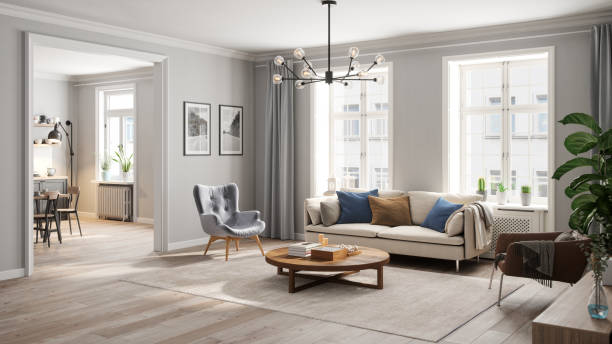
Residential interiors are not as straightforward as people think. On paper, they look simple. Rooms. Furniture. Finishes. But once you’re actually inside a home, nothing is simple anymore. Homes carry habits. Routines. Mood. Silence. Noise. They remember things.
At Dzen Interior Architects, residential interiors are approached with that understanding. Not as visual compositions, but as environments people will live inside, day after day, without thinking about design at all.
That’s usually the goal. For the design to disappear into daily life.
It Starts With How a Space Feels
Before plans, before materials, before layouts, there’s always a feeling. Some homes feel rushed. Some feel heavy. Some feel calm the moment you step inside. Those reactions happen quickly, often before you notice anything specific.
That first impression matters. But it doesn’t come from decoration. It comes from proportion. Light. Distance. How much space you have around you. Whether you feel exposed or protected.
Residential interiors should respond to that instinctive response. If a space feels tense, something is off. If it feels relaxed, usually many small things are working together quietly.
Watching How People Actually Live
People rarely live the way they describe. And that’s not a criticism. It’s just reality.
A living room might be designed for guests, but ends up being used mostly at night, quietly. A dining table becomes a work surface. A corridor becomes a pause space. These patterns are important. They shape decisions more than style ever could.
At Dzen, residential interiors are developed by paying attention to these behaviors. Not ideal lifestyles. Real ones. Messy ones. Repetitive ones.
Design works best when it accepts this instead of fighting it.
Flow Is Not a Concept, It’s a Feeling
Flow isn’t something you explain easily. You feel it when it’s right. You notice it immediately when it’s wrong.
You shouldn’t have to think about where to go next. Or where to sit. Or how to move through your own home. The space should guide you without instruction.
Residential interiors that handle flow well tend to feel effortless. Rooms connect naturally. Private spaces feel separate without being isolated. Public areas don’t overwhelm.
When this balance is achieved, people often say the home feels “easy.” That word comes up a lot.
Materials That Don’t Try Too Hard
In residential interiors, materials should feel honest. Comfortable. Not precious.
A home is touched constantly. Leaned on. Walked through. Surfaces age. And that’s not a problem. That’s part of living. Materials should allow for that kind of use without becoming stressful.
At Dzen, materials are chosen not just for how they look, but for how they behave over time. How they respond to light. How they feel under the hand. How they change.
Homes shouldn’t feel fragile.
Details That Make Daily Life Quieter
Some design decisions are invisible until they’re missing.
Storage where you actually need it. Lighting that doesn’t glare or distract. Furniture that fits the space instead of filling it. These things don’t announce themselves. But they affect everyday life constantly.
Good residential interiors remove friction. They reduce small annoyances. They make routines smoother without drawing attention to how.
That kind of design doesn’t stand out in photographs. But it stands out in living.
Architecture and Interior, Working Together
Residential interiors feel strongest when architecture and interior design are treated as one conversation. When walls, ceilings, built-in elements, and furniture are planned together, not layered afterward.
This creates clarity. Fewer visual interruptions. Less noise. More coherence.
At Dzen Interior Architects, interiors are designed architecturally. Not decorated. Not styled. Built from the structure outward.
Homes That Don’t Follow Trends
Trends move fast. Homes stay.
Residential interiors shouldn’t rely on what’s popular at the moment. They should rely on what makes sense for the people living there. Their pace. Their habits. Their preferences, even when those preferences are inconsistent.
Some homes become minimal. Others layered. Neither approach is the goal. The goal is relevance.
When a space reflects its occupants honestly, it feels settled. Grounded.
A Quiet Kind of Design
The best residential interiors don’t need explanation.
They don’t ask for attention. They don’t try to impress. They simply support life as it unfolds. Over time, they become familiar. Comfortable. Almost invisible.
And that’s usually when you know the design has worked.
That’s how Dzen approaches residential interiors. Thoughtful. Observant. Quietly resolved. Spaces designed not just to be seen, but to be lived in.